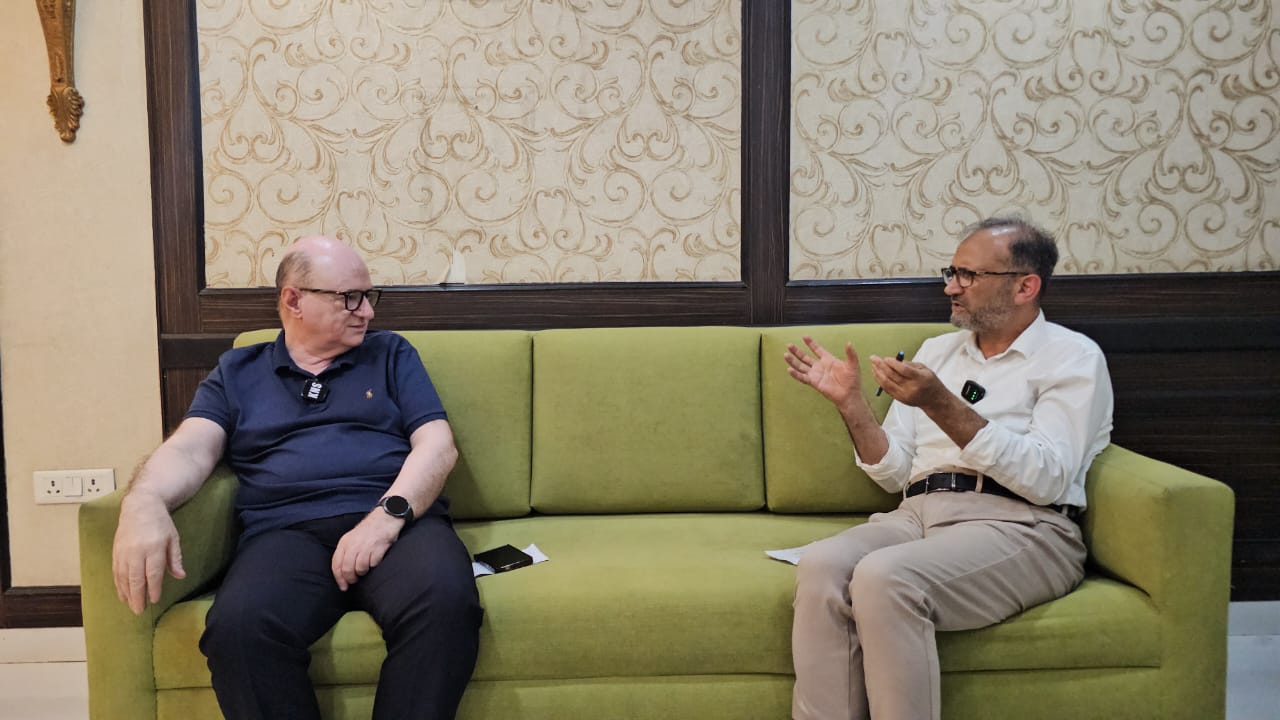
In this conversation with Kashmir News Service (KNS), renowned neurologist Dr Parvaiz Shah speaks to Editor in chief M Aslam Bhat about the different types of headaches, the science behind migraine, common triggers, the role of smoking, warning signs that should never be ignored and when patients should seek immediate medical care.
Excerpts
KNS: Headache is one of the most common complaints seen in medical practice. How do neurologists classify headaches?
Dr Parvaiz Shah: Broadly speaking, headaches can be divided into several categories, but the two most common types encountered in clinical practice are migraine and tension-type headache.
These two conditions account for the majority of headache cases seen by neurologists. While both involve pain in the head, they differ significantly in terms of symptoms, causes, triggers and management.
Understanding the difference between them is important because many patients often mistake one condition for the other.
KNS: Migraine is frequently discussed but often poorly understood. What exactly is migraine?
Dr Parvaiz Shah: Migraine is a neurological disorder rather than merely a headache. It is particularly common among women, although men and children can also be affected.
Studies from different parts of the world suggest that migraine affects a significant proportion of the population. It is also recognised as one of the leading causes of disability worldwide, second only to some major musculoskeletal disorders in certain analyses.
One important aspect of migraine is that it evolves through different phases. It is not simply a headache that begins suddenly and ends suddenly.
KNS: What are these different phases of migraine?
Dr Parvaiz Shah: The first stage is known as the prodrome phase.
This phase can begin several hours or even a day before the headache itself. During this period, patients may experience unusual symptoms such as excessive yawning, cravings for sweets, mood changes, fatigue or even loose motions without any infection or fever.
These symptoms are often overlooked because people do not immediately connect them with migraine.
The second phase is called aura, which occurs in approximately one-quarter of migraine sufferers.
During aura, patients may experience temporary visual disturbances. They may see flashing lights, dark spots, zigzag patterns or distorted images. Some people experience numbness or tingling sensations in different parts of the body.
These symptoms usually last between five and thirty minutes before the headache begins.
KNS: What does a typical migraine attack look like?
Dr Parvaiz Shah: A classical migraine headache is usually throbbing or pulsating in nature and often affects one side of the head.
Patients frequently become sensitive to light, noise and even routine activity. Many prefer to lie quietly in a dark room until the episode subsides.
Some patients also experience nausea and vomiting. In fact, many patients report feeling relief after vomiting.
Without treatment, migraine attacks can last anywhere from four hours to seventy-two hours. The attack may end naturally, after sleep or with appropriate medication.
.jpeg)
KNS: What factors commonly trigger migraine attacks?
Dr Parvaiz Shah: Migraine has numerous triggers and these vary from person to person.
Common triggers include sleep deprivation, excessive screen exposure, long-distance travel, extreme temperatures, fasting and emotional stress.
Certain foods can also act as triggers. For some patients, cheese and specific processed foods may provoke attacks.
Among women, hormonal changes during menstruation frequently trigger migraine episodes.
Identifying personal triggers is an important part of long-term migraine management because avoiding triggers can significantly reduce the frequency of attacks.
KNS: Besides migraine, what is the other major type of headache you commonly encounter?
Dr Parvaiz Shah: The second most common type is the tension-type headache.
Unlike migraine, tension headaches are usually not throbbing. Patients often describe them as a feeling of tightness around the head, as though a band has been tied around it. Others describe a sensation of heaviness or pressure.
The pain may last for a few minutes or continue for several hours. Although generally less severe than migraine, it can significantly affect daily functioning and quality of life.
KNS: What causes tension-type headaches?
Dr Parvaiz Shah: Stress remains one of the biggest contributors.
People working long hours, dealing with professional pressures, inadequate sleep and prolonged mental strain are particularly vulnerable. Modern lifestyles have increased the incidence of tension headaches because many individuals spend long periods in front of computers and digital devices while managing stressful routines.
Unlike migraine, tension headaches are generally not associated with nausea, vomiting or sensitivity to light and sound.
However, they can become recurrent if the underlying stress factors are not addressed.
KNS: Many people in Kashmir attribute headaches to sinus problems. How often is that actually the case?
Dr Parvaiz Shah: Quite often, people confuse sinus-related symptoms with migraine.Click Here To Follow Our WhatsApp Channel
During winter, especially in Kashmir, we frequently see patients with nasal congestion, blocked sinuses and upper respiratory infections. These conditions can cause facial pain, pressure around the forehead and discomfort around the eyes.
People commonly describe this as "cold settling in the brain," but medically speaking it is usually related to sinus disease rather than migraine.
Distinguishing between the two is important because the treatment approaches are completely different.
KNS: Can a headache sometimes indicate a more serious underlying problem?
Dr Parvaiz Shah: Absolutely.
While the majority of headaches are benign, some may signal potentially serious neurological conditions.
For example, a person may suffer a seemingly minor head injury and initially appear completely normal. Days or even weeks later, however, blood may gradually accumulate around the brain, producing a condition known as chronic subdural hematoma.
Such patients may later develop persistent headaches, confusion, weakness or changes in behaviour.
This is one reason why persistent headaches, especially after head trauma, should never be ignored.
KNS: You mentioned that migraine and tension headaches are the most common forms. Which do you encounter more frequently in your practice?
Dr Parvaiz Shah: Migraine and tension-type headaches together constitute the majority of headache cases seen in neurological practice.
Some patients suffer exclusively from one type, while others may experience both conditions at different stages of life.
These remain by far the most common headache disorders encountered in clinics.
KNS: What should people do if they experience a severe headache for the first time?
Dr Parvaiz Shah: The most important advice is not to self-medicate.
Many people immediately start taking painkillers without consulting a doctor. This can sometimes delay diagnosis and may even complicate the situation.
A first-time severe headache should always be evaluated by a qualified medical professional. The underlying cause needs to be identified before treatment begins.
Not every headache is migraine, and not every headache is harmless.
KNS: Smoking is known to affect overall health. Does it also influence headaches?
Dr Parvaiz Shah: Yes, smoking has important neurological consequences.
There are two types of exposure, active smoking and passive smoking.
Many people underestimate passive smoking, but research has shown that passive smokers may face significant health risks, including an increased likelihood of developing serious illnesses.
From a neurological perspective, smoking can increase the frequency of headaches and may worsen symptoms in individuals who already suffer from migraine.
Reducing exposure to tobacco smoke is therefore beneficial not only for lung and heart health but also for brain health.
KNS: Some people develop headaches after seizures. Is there a connection between epilepsy and headaches?
Dr Parvaiz Shah: Yes, there can be.
Patients with epilepsy sometimes experience headaches after a seizure episode. These are generally short-lived and differ from migraine headaches.
The headache occurs as a consequence of the seizure itself and usually resolves within a limited period.
However, recurrent headaches and epilepsy are separate neurological conditions and should not automatically be considered the same problem.
KNS: Are there any unusual forms of migraine that people should know about?
Dr Parvaiz Shah: One important but less commonly recognised form is vestibular migraine.
In these patients, dizziness becomes a major feature. They may feel as though the environment around them is moving, spinning or swaying. Some experience ringing in the ears or disturbances in balance.
Because dizziness is the dominant symptom, many patients initially consult ENT specialists before eventually receiving a neurological diagnosis.
Vestibular migraine demonstrates that migraine is far more complex than simply a painful headache.
KNS: At what age does migraine usually begin?
Dr Parvaiz Shah: In many patients, the first migraine episode occurs between the ages of ten and twenty years.
That said, migraine can occur at virtually any age. It is seen in children, adolescents and adults.
One interesting observation is that migraine tends to become less common after the age of fifty. While it does not disappear entirely, its prevalence generally decreases as people grow older.
KNS: Finally, what message would you like to give to people who frequently experience headaches?
Dr Parvaiz Shah: My message is simple: do not ignore recurring headaches and do not assume that every headache is normal.
Understand your symptoms, identify potential triggers and seek medical advice when necessary. Early diagnosis often leads to better treatment outcomes and prevents unnecessary suffering.
Headaches are among the most common neurological complaints worldwide, but they are also among the most treatable when approached correctly.
Most importantly, avoid self-medication, maintain a healthy lifestyle, get adequate sleep and consult a healthcare professional whenever symptoms change or become unusually severe.
KNS: Thank you for having us
Dr Parvaiz Shah: Thank you